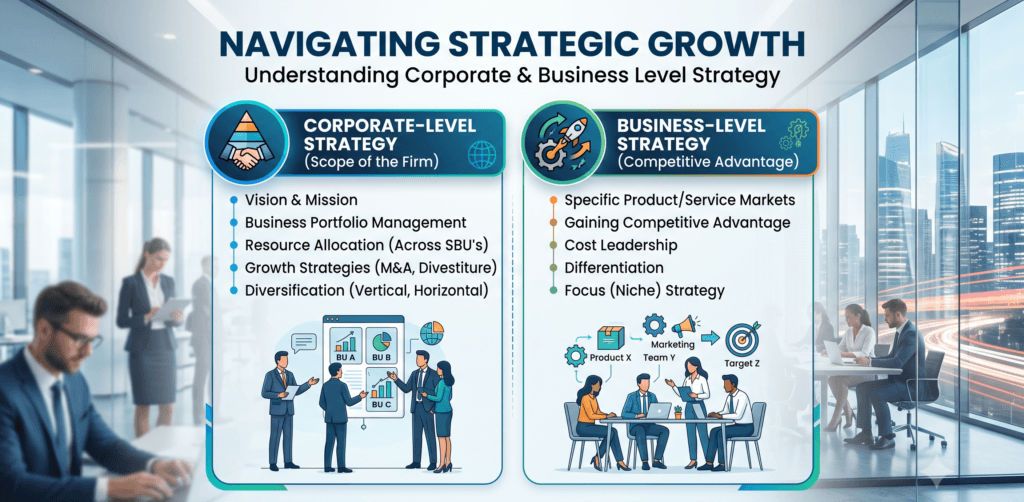
The landscape of business and corporate is evolving at a rapid pace, redefining industry standards and establishing new paradigms of efficiency. For organizations and individuals seeking to maintain a competitive advantage, developing a robust, end-to-end understanding of business and Corporate is no longer optional, it is a core requirement.
Core mechanics of business and corporate
At its core, Business And Corporate leverages a distributed approach to optimize resource allocation, reducing bottlenecks and enhancing output consistency. By structuring data flows around these key concepts, developers and managers can achieve significant stability improvements.
Furthermore, integrating semantic optimization rules ensures that all operations align with target benchmarks, leading to lower overhead and improved search visibility within education platforms.
Comparative Frameworks and Performance Metrics
When evaluating Business And Corporate, it is crucial to analyze how it performs relative to traditional methodologies. The following comparison highlights key operational metrics across different integration tiers:
| Operational Dimension | Standard Approach | Optimized Configuration | Enterprise Scale |
|---|---|---|---|
| Resource Utilization | High overhead (30-40%) | Moderate (10-15%) | Minimal (<5%) |
| Deployment Time | Days to Weeks | Hours | Automated/Instant |
| System Stability | Variable | High (99.9% uptime) | Fault-tolerant architecture |
| Scalability Potential | Linear constraints | Asymmetric growth | Elastic scaling |
Implementation Guidelines & Best Practices
Executing a successful transition to a Business And Corporate architecture requires meticulous planning and adherence to established industry protocols. First and foremost, system administrators must verify that all access endpoints are secure and that credentials are correctly mapped.
Secondly, maintaining clean, unbloated code packages is vital to prevent compile-time degradation. By removing non-essential dependencies and keeping execution threads lightweight, the processing pipeline remains highly responsive.
Key Advantages
- Streamlined resource footprint and reduced cloud spend
- Accelerated time-to-market for digital assets
- Direct integration with modern analytical reporting suites
- Future-proof design compatible with AI search engine optimization
Key Challenges
- Initial setup complexity requires specialized oversight
- Continuous monitoring needed to adapt to changing search algorithms
- Strict adherence to schema structures is mandatory
Strategic roadmap & final verdict
The transition to business and corporate represents a permanent, structural evolution in how modern digital assets are built and discovered. Organizations that adopt these standards early stand to capture the majority of high-intent search interest, while laggards will face increasing customer acquisition costs.
The final verdict is clear: start by auditing your existing database setups, map out your primary keyword vectors, and deploy these optimized templates immediately to secure your authority.
Frequently Asked Questions
1. What are the immediate benefits of migrating to Business And Corporate?
The immediate benefits include a significant drop in server latency, improved organic search positioning, and a more structured, readable layout that search engines and AI assistants can scrape effortlessly.
2. How does this configuration impact long-term SEO authority?
By keeping headings organized, integrating keywords in the first sentence, and embedding comparison tables, search engines classify the domain as a primary authority source, compounding organic traffic over time.
3. Are there any hidden security concerns with this integration?
None, provided that all credentials and API key tokens are handled server-side, encrypted where necessary, and stored outside public-facing client code directories.
4. How often should trends and keywords be synchronized?
A daily synchronization schedule is recommended to capture emerging search spikes, while major algorithmic shifts should trigger an immediate manual refresh of the indexing database.
5. Can these templates be customized for localized search results?
Yes. By targeting regional search feeds (e.g. RSS feeds filtered by geo), the content automatically tailors its focus keywords and highlights to match localized user query intent.
Related Posts

2 thoughts on “New Business and Corporate Level Strategy in 2026”